
Another Name, Another Story
how many more names before it makes a difference?

May 3, 2026
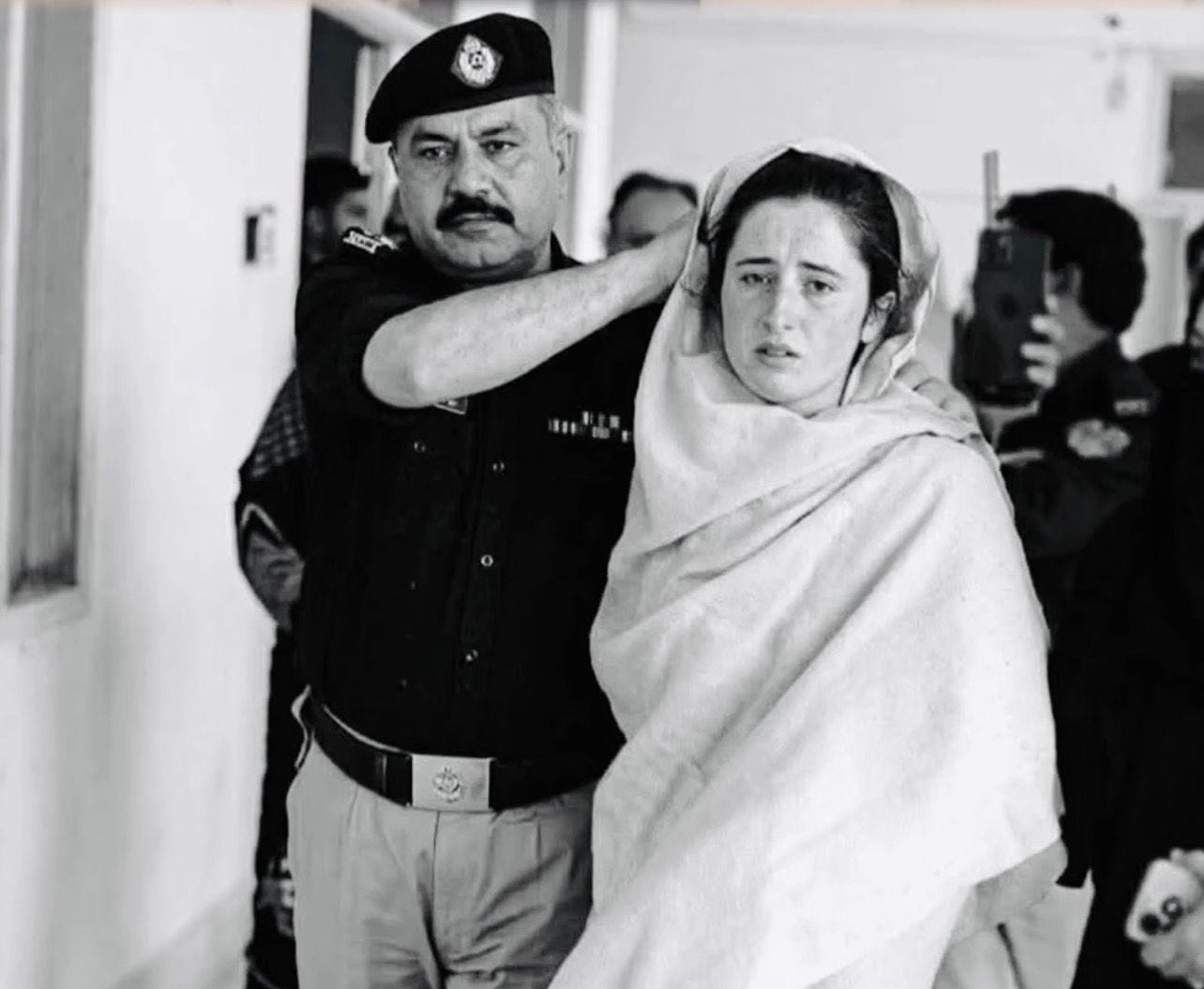
A 25-year-old woman leaves her home in fear at 1 a.m. Barefoot, terrified, and alone, she crosses a river and reaches a police station seeking protection.
Trembling, injured, and exhausted, she tells the police that her family will kill her if she is forced to return home.
The police register her case, assure her of protection, and present her before the court the next day. The court orders that she be sent to Dar-ul-Aman for her safety.
Then the video of the courtroom surfaces.
Outside the courtroom, her father places his pagri on the ground and emotionally pleads with her to come home.
Unable to watch her father cry, she withdraws her case and returns with him.
But before leaving, standing in court in front of the media, she says words that would become her final warning:
“I know I will be killed.”
And that is exactly what happens.
Twelve days later, her body is found. Her husband and maternal uncle confess to the murder.
One more life reduced to a headline.
One more woman erased.
The accusation: Karo Kari, a violent tribal practice used to justify murder in the name of “honor.”
…
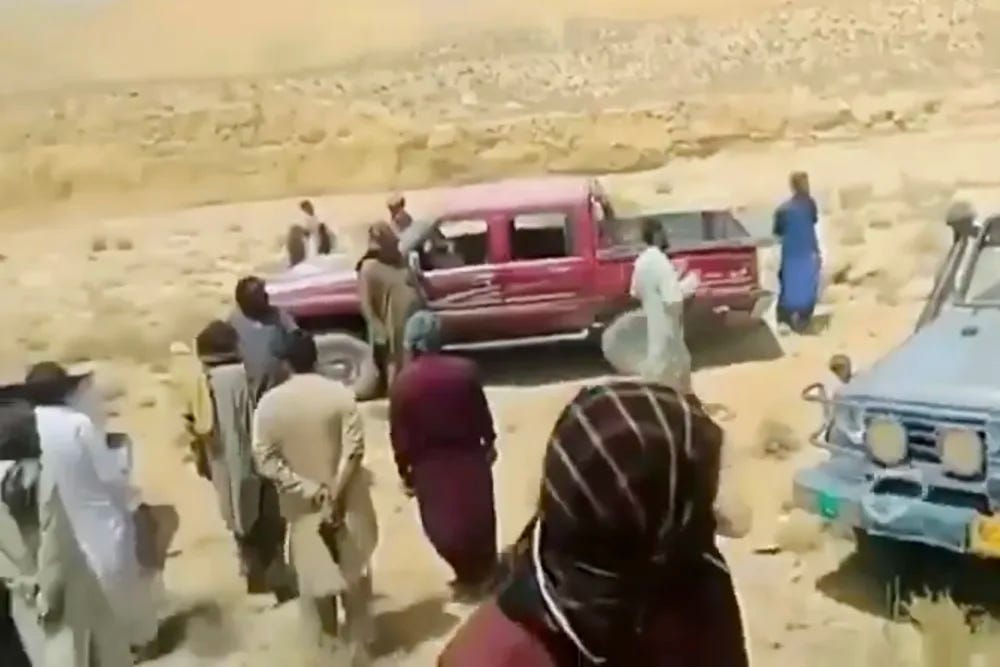
Bano Satakzai stands on the cracked ground of her village, surrounded by men she had known her entire life - brothers, uncles, neighbors - fully aware of why they are there.
Before killing her, they grant her a final wish.
But she does not beg. She does not cry.
Instead, she asks her brother to walk seven steps with her before shooting.
The entire execution is recorded and circulated online.
Only after the video goes viral is a case finally registered. No relative comes forward to seek justice for her death. Even her mother publicly states that what happened to her daughter was “fair” because, in their view, it was part of their tradition.
Her “crime”? Defying her family’s expectations.
…
These crimes are not limited to Pakistan. According to reports by the United Nations (UN), the United Nations Office on Drugs and Crime (UNODC), the United Nations Population Fund (UNFPA), the United Nations Regional Information Centre (UNRIC), and the Human Rights Commission of Pakistan (HRCP), thousands of women and girls are killed every year worldwide in the name of so-called “honor” and other forms of gender-based violence.
It is the murder of a person perceived to have brought “shame” upon the family through personal choices, relationships, or marriage. The perpetrators are often close relatives, while communities and sometimes institutions respond with silence, justification, or indifference.
These practices have nothing to do with religion. They are rooted in tribal and cultural traditions and are completely contrary to the teachings of our last prophet Muhammad (saww), who taught that the killing of one innocent person is akin to killing all of humanity and repeatedly emphasized the sanctity of human life, justice, and accountability.
No individual, family, or community has the right to take another person’s life in the name of “honor.”
The most disturbing part is that this mindset is not confined to remote villages or illiteracy. Some of its strongest defenders are highly educated men, fluent in law, politics, and diplomacy, who still insist that “honor” is a legitimate moral system rooted in tradition.
Consider Akbar Bugti, often regarded as a symbol of Pakistan’s educated elite. He attended Aitchison College and later studied at the University of Oxford.
Yet in a 2006 interview with The Guardian journalist Declan Walsh, he described how a couple eloped: the man was shot, and the woman was hanged with her own shawl by her family.
“The job was done. Honor was restored.”
…
History keeps resurfacing in the same form: a murder, a viral video, temporary outrage, and then silence.
Yet no state, institution, province, or authority truly dares to confront the mentality that enables these crimes. Instead, these systems are often tolerated because they help maintain political control over the region, allowing powerful tribal and feudal figures to dominate places rather than strengthening democratic institutions and the rule of law.
That crossing of the river barefoot at 1 a.m., and those seven final steps, carried more courage and honor than any of the men involved in these murders, directly or indirectly.
Arrests, headlines, and temporary outrage are only partial responses. They do not solve the problem.
Until the sick mentality behind these crimes is confronted, history will continue to repeat itself.
Or perhaps the real question is:
What if the roles were reversed?
…
Thanks
as a Pakistani its really heartbreaking to watch what's happening to the 'Islamic Republic of Pakistan' right now..
and sadly this isn't the first time
It is not honour that is wrong in itself. It is the vicarious imposition of honour that is wrong when it is imposed with corporal punishment. Lethal and otherwise.
What was interpreted as moral courage in submitting to an executioner is personal honour showing itself and then being snuffed out. Honour killing is exactly that. The murder of personal honour. Integrity is haram. Not forbidden by God but by a culture that fears it.
Is that not the single lesson of Islam? Of all religions? Niyyah. Faith without works is as hollow as works without faith. Kavanah. The first step of the eightfold path.
Honour only becomes meaningful when it is freely chosen. Once it is imposed it loses reality and becomes no more than violence wearing a mask bearing only a name. It has no substance.
To be without this understanding is merely ignorance.
To impose it by bloody force ... Not the temptation of shaitan, but the human capacity to scar the soul until even paradise becomes only the memory of what a pure heart once imagined.